
Back to Blogs

Beyond the Firewall: 6 Managed Cybersecurity Services Every Business Needs

Needs Ten years ago, an internal IT team could install a hardware firewall, deploy basic antivirus software, and feel reasonably secure. Today, relying on those measures alone is like locking the front door while leaving every ground-floor window wide open.

Imagine discovering that a $50,000 vendor invoice was paid to a fraudulent bank account or arriving on Monday morning to find your company’s files locked by ransomware. With hybrid work and cloud applications, cybercrime is no longer a distant threat; it is an everyday business risk. Meanwhile, internal IT teams are busy handling support tickets and maintaining network availability, leaving limited time to investigate sophisticated threats.

By identifying security blind spots and working with a dedicated cybersecurity provider, you can better protect your data, reputation, and bottom line.

The Reality of Modern Cyber Threats

Attackers no longer focus solely on breaking through an office firewall. They target people, devices, and cloud accounts directly:

  • Identity theft and stolen credentials: Attackers use phishing to gain direct access to cloud accounts.
  • Business email compromise (BEC): Scammers impersonate executives or vendors to persuade employees to transfer money to fraudulent accounts.
  • Ransomware and data extortion: Malicious software can encrypt files, disrupt servers, and bring operations to a halt.
  • Cloud misconfigurations: Public sharing settings and forgotten administrator accounts can expose sensitive data or create opportunities for unauthorized access.

Quick Essentials: Practical Steps to Improve Security

Managed security works best when it is supported by strong everyday practices. Every organization should start with these fundamentals:

  • Enable Multi-Factor Authentication (MFA) across all email and cloud accounts.
  • Turn on automatic updates for all operating systems, software, and devices.
  • Enforce strong, unique passphrases and use a password manager.
  • Verify suspicious messages and unexpected invoice or payment changes before clicking links or sending money.
  • Back up critical business data regularly and test that it can be restored.

How Six Managed Services Help Protect Your Business

Cybersecurity can feel complex, but improving protection does not have to overwhelm your team. Managed services can help reduce risk and build resilience while allowing internal IT staff to focus on core operations:

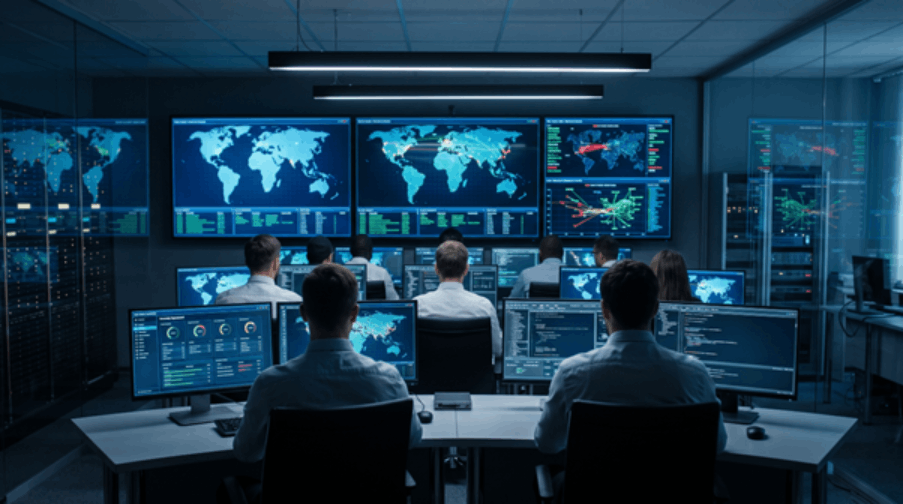
1. 24/7 SOC Monitoring & Threat Response: Detect and isolate threats before they disrupt your business with round-the-clock surveillance.

Example: At 2:00 AM on a Sunday, an employee’s account suddenly starts downloading 50 GB of client files. Our SOC team spots the anomaly in minutes and cuts the connection before data is stolen.

2. Endpoint & Device Protection (EDR): Replace basic antivirus with smart behavioural monitoring that locks down laptops, phones, and servers.

Example: A remote worker accidentally downloads ransomware. The EDR software instantly blocks the file and disconnects that laptop from the Wi-Fi so the virus cannot spread to the main office network.

3. Microsoft 365 & Identity Security: Harden your cloud workspace with strict MFA, conditional access rules, and anti-phishing filters.

Example: A hacker steals a staff password and tries logging in from overseas. The system notices the employee was logged in locally 10 minutes ago and blocks the foreign login automatically.

4. Security Awareness Training: Equip your staff with the habits to spot phishing, social engineering, and invoice fraud through safe simulations.

Example: The accounts team receives an urgent email from the "CEO" requesting an immediate wire transfer. Thanks to training, the staff member spots a slightly misspelled email address and reports the scam.

5. Security Posture Management: Continuously audit your network rules, cloud settings, and Microsoft Secure Score to close hidden security gaps.

Example: During a routine audit, our engineers discover an ex-employee still has an active Admin account and a shared folder is set to "Public" locking both down before attackers find them.

6. Security Monitoring & Reporting: Translate complex firewall logs and sign-in alerts into clear, executive-ready monthly summaries.

Example: Instead of 100 pages of confusing technical logs, leadership gets a clean 1-page dashboard: "Blocked 350 phishing emails, stopped 2 unauthorized logins, and 99% of company laptops are fully patched."

Ready to Strengthen Your Cyber Resilience?

Whether you are looking to offload daily threat management, planning a security upgrade, or simply want to understand your current risk posture, you don't have to navigate it alone.

Schedule your free IT security posture assessment. Identify potential blind spots, understand your risk profile, and receive a tailored action plan.